From a Spreadsheet to an App: The Story Behind Kaasi
 Aanjelo Salgado
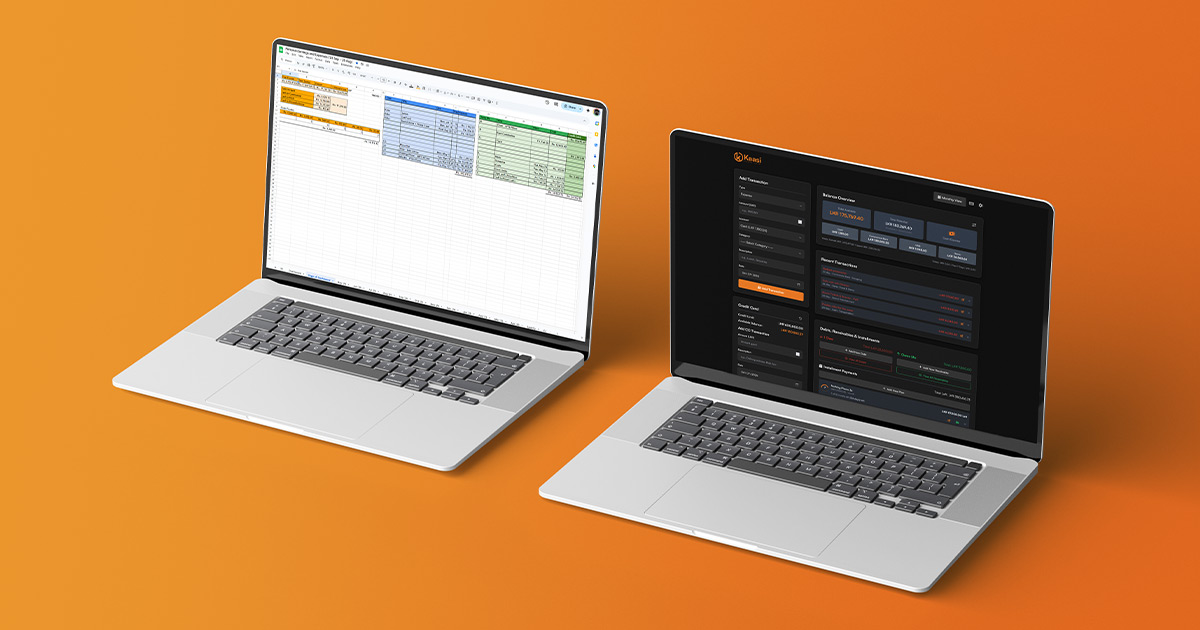
Every project has a starting point. For Kaasi, it began with a recurring question that I kept asking myself at the end of each month: "Where did my money actually go?" I was earning a salary, paying my bills, and trying to save, but the numbers never quite added up the way I expected. There was a frustrating gap between my bank balance and my understanding of my own habits. For years, my answer to this problem was a Google Sheet.
The Spreadsheet Life
That spreadsheet was my attempt at control. It was a grid of columns, rows, and carefully crafted formulas. While it did the basic job of logging my expenses, getting any real insight was a manual, time-consuming process. It could tell me what I spent, but not how I could improve.
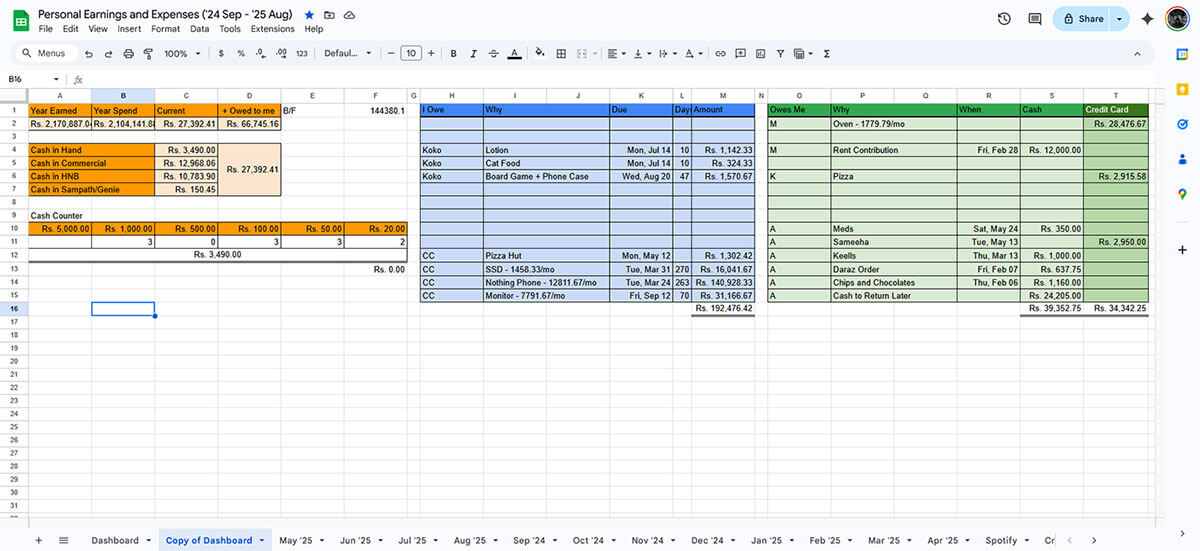
Dashboard of the spreadsheet that started it all. Functional, but not very friendly.
I knew there had to be a better tool out there. My search for a good expense tracker app, however, led to more frustration. Most were clearly built for a US or European market, forcing me to work in dollars and ignore our local context. The few that were available were either cluttered with features I didn't need while missing ones I did, plastered with annoying ads, or demanded a subscription fee just to get started.
I was just a regular person in Sri Lanka looking for a simple tool to manage my money. When I couldn't find one that was private and easy to use, I decided I had to build it myself.
The Idea of Kaasi Takes Shape
That decision was the true beginning of Kaasi. I wanted a name that felt local and familiar, which is why I chose කාසි, the Sinhala word for money and coins. From the very first line of code, the project was guided by a few core principles that were born directly from my frustrations with other apps.
I decided it had to have these things:
- Absolute Privacy: Your financial data should belong to you, and only you. Kaasi stores everything locally on your device, not on a remote server. For those who want a backup, the upcoming Google Drive sync feature is strictly opt-in. It will only store your encrypted backup file in your own Google Drive, and Kaasi will only have permission to access that specific file, nothing else. You have full control.
- Built for Sri Lankans: Every calculation, every summary, every input is in LKR by default. It's designed for how we live and transact here.
- A Clean, Focused Experience: No ads. No subscriptions. The goal of the app is to help you, not to sell you things or distract you.
- Features That Actually Help: It needed to be more powerful than my old spreadsheet. That meant proper expense breakdowns, a way to track money I've loaned out or borrowed, and a clear system for handling credit card payments.
Turning this vision into a real, working app was a challenge. I worked alongside Google's Gemini AI to help me solve complex coding problems and refine the user interface. It was a unique partnership, combining a deeply personal goal with the power of modern technology.
Where We Are Today
Today, Kaasi is the exact tool I wished I had all those years ago. It's a simple, private, and powerful expense tracker that brings clarity to personal finances. It’s built on the simple belief that managing your money should not be a source of stress or a risk to your privacy.
The journey from that messy Google Sheet has been a rewarding one, and this is still just the beginning. Thank you for taking the time to read the story and for being part of the Kaasi community.